
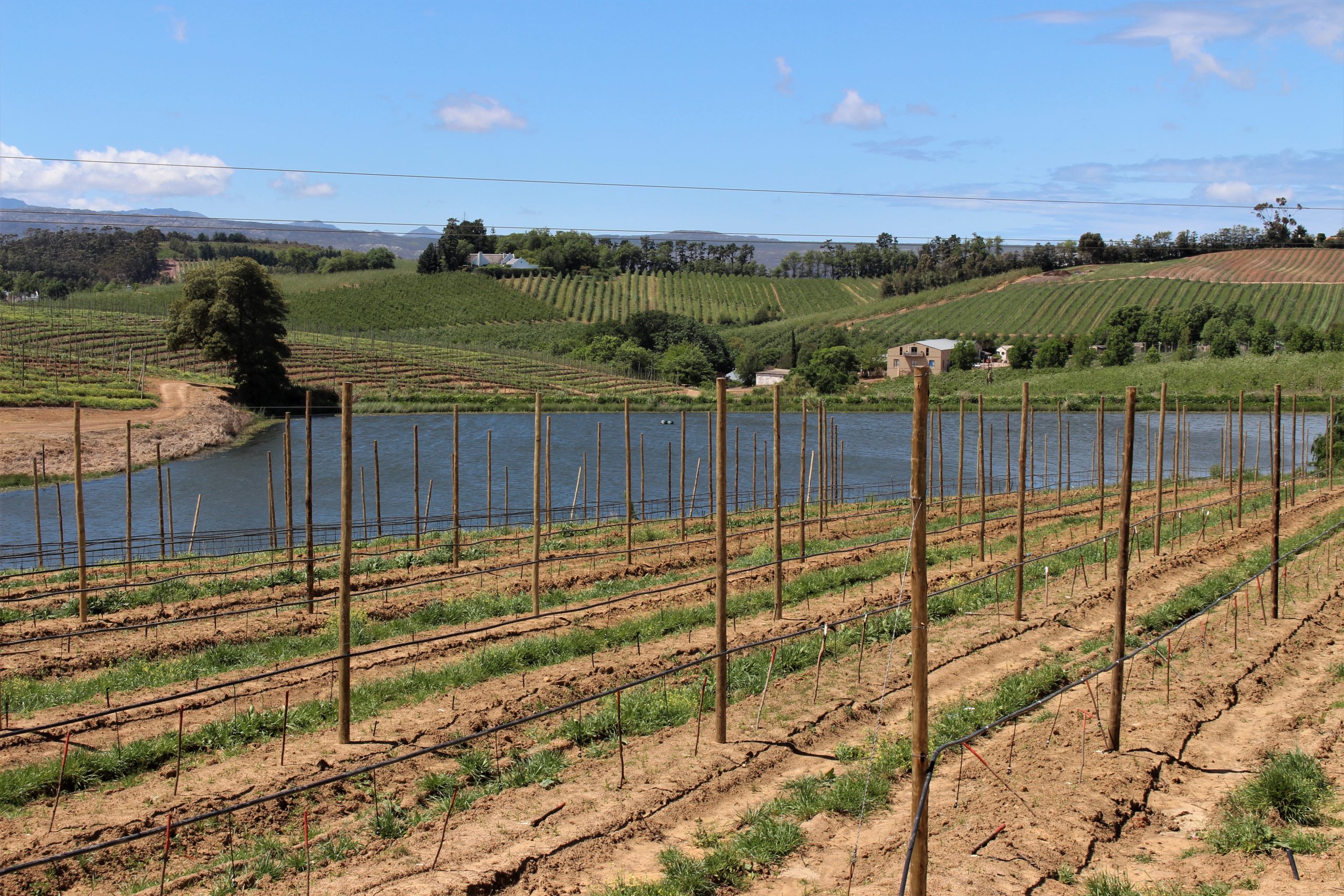
Critical Water Shortages Irrigation Guidelines for Deciduous Fruit Trees
Droughts require using every drop of water as economically and efficiently as possible. The greatest water savings come early and late in the season.
The principle is to conserve water during the cell division phase, from budding until 40 days after bloom in pome fruit or until the end of stone hardening in stone fruit. During these stages, the tree is less sensitive to water stress, and controlled water deficit does not significantly affect fruit size. Furthermore, these periods have lower evapotranspiration, reducing plant water demand. Early in the season, a root flush typically occurs, and a drier soil profile can help stimulate a stronger root flush, which can support more effective nutrient and water uptake later in the season. In pome fruit, mild water stress occurring before irrigation events during the first 40 days after full bloom can also help control excessive vegetative growth. From 40 to 60 days after full bloom, deficit irrigation can limit active shoot growth. In a water-scarce year, excessive vegetative growth directly increases transpiration and water use. Controlling early-season vigour through controlled water stress can also improve light penetration in the canopy and support next season’s bud development.
The second phase, when water can be saved, occurs after harvest for both stone and pome fruits. This is the time when the tree supplements its reserves. Research conducted in the Koue Bokkeveld on water shortages during specific phenological stages of Golden Delicious apples found that a very dry period after harvest, under a water regime (90% withdrawal of plant-available water), had little effect on fruit size or yield in the following season. (Note that 90% withdrawal is an extreme – not a target withdrawal.) The extent of post-harvest water savings depends on the severity of water shortages or the block’s post-harvest vigour. Avoid excessive water stress after harvest on stone fruit until mid-January, as bud initiation is taking place for the next season.
After harvest, a significant root flush typically occurs. Depending on the severity of water limitations and soil conditions, longer, deeper irrigation followed by a 5-10-day interval before the next irrigation can encourage deeper root development. Deeper roots can improve orchard resilience to future drought conditions.
The period during which the available water should be maximally utilised for irrigation is during the cell enlargement and maturation phases. For pome fruit, this is roughly 40 to 60 days after bloom, from shoot growth cessation until harvest; for stone fruit, it is from pip hardening until harvest.
Find the document, Fresh Notes 229, here: Fresh-Notes-229_February-2026_Critical-Water-Shortages
Related Posts
Dennegeur’s Stephan Beukes | Western Cape Farmer of the Year
WESTERN CAPE — Stephan Beukes of Dennegeur Farms in Grabouw has been named the 2026…
Jaco Wolmarans wins Hortgro Photo Competition 2026
Somerset West – Hortgro is proud to announce Jaco Wolmarans as the winner of the…

The 2026 Hortgro Awards Celebrate Excellence in the South African Deciduous Fruit Industry
Somerset West — The annual Hortgro Awards brought together leading figures from the pome and…

Hortgro Izithelo Media Award 2026 | Lucentlands Media
Hortgro awards the Izithelo Media Award annually for outstanding journalism in and about the deciduous…