
SIZA – From compliance to competitive advantage
Text: Gerrit Rautenbach
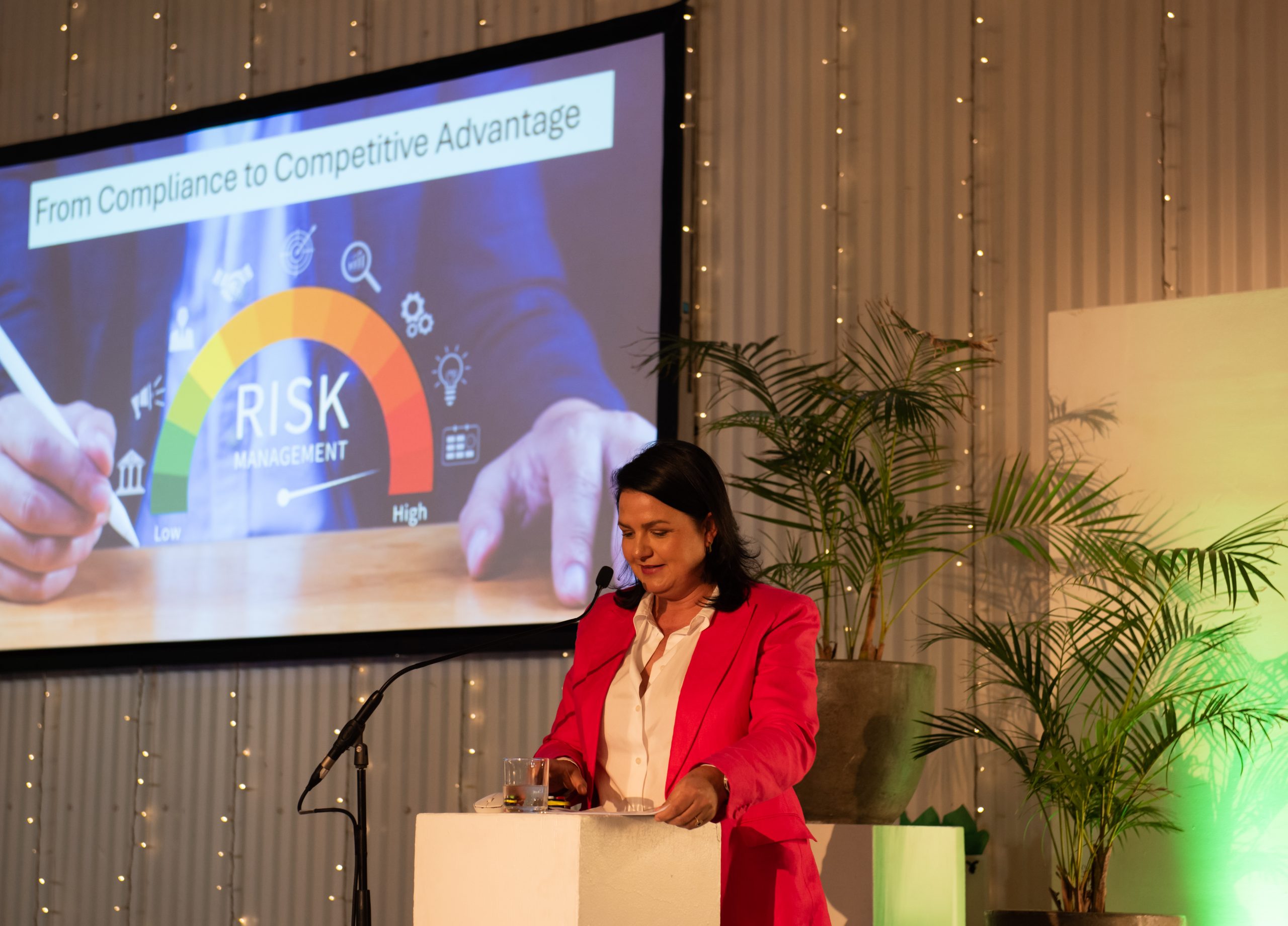
Georgina Hewitt, co-owner of Verdun Estates, Hortgro Stone Vice-Chairperson, and SIZA Board Director, shared her thoughts on “How to shift from compliance to competitive advantage and what we must do next” at the recent SIZA Conference in Paarl.
It starts with a mindset shift. Instead of seeing a cost, audit, checklist, a burden and a once-a-year or even three-year event, rather see: Better business management; Better decision-making; Better market access; Better risk management; Better farming; and Supporting your business ideals and buyer assurance.
Compliance creates resilience, and resilient businesses recover faster, attract investment, retain, upskill and support workers, protect natural resources, adapt well to change and earn buyer confidence. In short, compliance is not the outcome; resilience is. Compliance is merely a tool towards a stronger, more resilient business.
Then it becomes a question of trust. The buyers of tomorrow will increasingly ask for proof that they can trust you. Can you show responsible labour practices and environmental stewardship? Can you demonstrate continuous improvement and provide reliable data? Trust will increasingly become South Africa’s most valuable export.
Then one has to look at what is the grower’s responsibilities. It begins with building and implementing management systems, not just audit files. Use compliance information to improve the business, review existing practices, and ensure they are resilient.
Invest in your workers, protect biodiversity and natural resources, minimise waste and continue improving resiliently. See compliance as part of production preparation and make it a lifestyle. Next are retailers’ and buyers’ responsibilities. They need to reward good performance, reduce unnecessary duplication and recognise equivalent assurance systems.
Don’t create unnecessary monopolies and support continuous improvement. Understand on-the-ground impacts, daily challenges and the unique South African context. Invest in long-term supplier relationships. And shared responsibilities create stronger supply chains.
Then we get to the auditor, the person that you might think is a policeman, but can (and should) be your good friend. Whatever your audit. To get it right, the auditor should remain independent and consistent. A good auditor educates while auditing, constantly promoting improvement while maintaining credibility. Every audit should leave a business stronger.
What is the government’s role? They must create an enabling environment whilst supporting responsible farming. In addition, they must promote practical legislation and offer transparent, workable communication channels for suppliers. Collaboration should constantly be encouraged because the government and industry must succeed together. And finally, the government must protect South Africa’s reputation.
What is SIZA’s responsibility?
- Continue simplifying compliance within the confines of what is needed on both the buyer and supplier sides
- Continue embracing technology
- Strengthen data-driven assurance
- Expand collaboration
- Support suppliers with capacity building and toolkits
- Remain trusted
- Never stop improving
A competitive advantage is built on seven pillars. Trust, transparency, people, partnerships, innovation, continuous improvement and finally resilience. Imagine South African agriculture where compliance data reduces audit duplication and technology provides real-time assurance. An agricultural framework where environmental performance becomes measurable, and workers have trusted reporting channels. Imagine an agriculture where buyers recognise South Africa as the world’s most trusted agricultural supplier.
That future is achievable, but our challenge is not to do more audits, but to build better businesses. Not more paperwork, but more performance. Forget minimum standards and focus on continuous improvement. Above all, we need compliance that creates value.
Related Posts
Burn Baby Burn | Invasive Tree Management Builds Water Security
Liz Metcalfe is co-director and organisation coordinator at Living Lands. She spoke to Jenny Underhill…

After 25 Years, Tru-Cape’s Henk Griessel Steps Back — But Not Away
At the end of July 2026, Henk Griessel officially retired from Tru-Cape Fruit Marketing after…
Pollination in the spotlight
It is that time of year when pollinators work hard to ensure a successful production…
SIZA Does Matter
The 10-year conference of The Sustainability Initiative of South Africa (SIZA) took place on 19…