
New pesticide regulatory framework on the cards for South Africa
Text: Elise-Marie Steenkamp
Last week, a diverse group of agricultural stakeholders gathered in Stellenbosch to discuss the future of pesticide regulation in South Africa.
The Department of Agriculture (DoA) called for the colloquium, themed “Transforming Agricultural Regulatory Policy within the One Health Concept”, to shape the framework that prioritises human, environmental, and agricultural well-being.
The current regulation, Act No. 36 of 1947, is seen as outdated and inadequate, said Mr Mooketsa Ramasodi, the Director-General of the DoA, during the opening address.
According to Ramasodi, the transformation of South Africa’s pesticide policy requires a multifaceted approach, bringing together policymakers, researchers, civil society, academia, various government departments, the private sector, and other stakeholders.
Mr Maluta Mudzunga, Registrar and Chief Director of Inspection and Quarantine Services, noted that while Act 36 was initially intended to ensure farmers had cost-effective pest control tools, its shortcomings have become apparent. Rising cases of acute poisoning and chronic illnesses linked to pesticide exposure underline the risks of the current system.
Several civil society organisations participated in the discussions. Dr Collete Solomon, from Women on Farms, which represents female agricultural workers, said that 67 pesticides currently used by South African agriculturists are banned by the European Union. “These remedies are banned in their own European countries but exported to Africa for use. That is double standards,” Solomon said.
Solomon further claimed that agricultural workers are not given the correct personal protective equipment (PPE) and, as a vulnerable group, they are easily exploited.
Dr Cindy Stephen from the Poison Information Centre said their data showed that most incidents of acute poisoning happen in households. “So-called street poisons and other highly hazardous products (HHPs) are often stored or used where people sleep and eat. Even though the agricultural industry is regulated, there are some pesticides used by agriculture that should not be used at all,” Stephen said.
Several industry stakeholders cautioned against a blanket ban on HHPs, noting that agricultural remedies are strictly regulated; without certain products, farmers cannot produce specific crops.
Rodney Bell, CEO of CropLife SA, pointed out that 26 remedies have already been phased out this year, marking significant progress. He emphasised that stewardship, from research and development to responsible disposal of obsolete products, is a key part of CropLife’s mandate.
Bell warned that eliminating all chemical products is not a solution, as black-market and smuggled pesticides would continue to circulate. Instead, he advocated for structured regulation supported by farmer/farm worker training, information-sharing, and safe alternatives.
CropLife assists with the regulation of ag remedies by hosting webinars, training sessions, and distributing pamphlets and information to agricultural workers, farmers and other stakeholders.
For policymakers, the challenge lies in finding a balance. Dr Mogale Sebopetsa, Head of the Western Cape Department of Agriculture, reminded attendees that the new policy should be grounded in solid science, facts, and research, as agriculture is the backbone of the Western Cape’s economy. “We cannot put thousands of jobs, crops, livelihoods, and food security at risk without ensuring viable alternatives are available,” he said.
According to an attendee who wishes to remain anonymous, the Stellenbosch colloquium emphasised that transforming pesticide policy will necessitate collaboration among government departments, industry, civil society, and science.
“Unfortunately, the colloquium was not representative of all the agricultural stakeholders. We cannot ignore agriculture’s dependence on crop protection remedies, but we must acknowledge the strides made with integrated pest management and regenerative agriculture. The debate and the process of working towards a new regulatory framework will remain complex. The industry is committed to sustainable and ethical agriculture, and new regulations must protect it. It is vital to put aside emotions and incorporate common sense.”
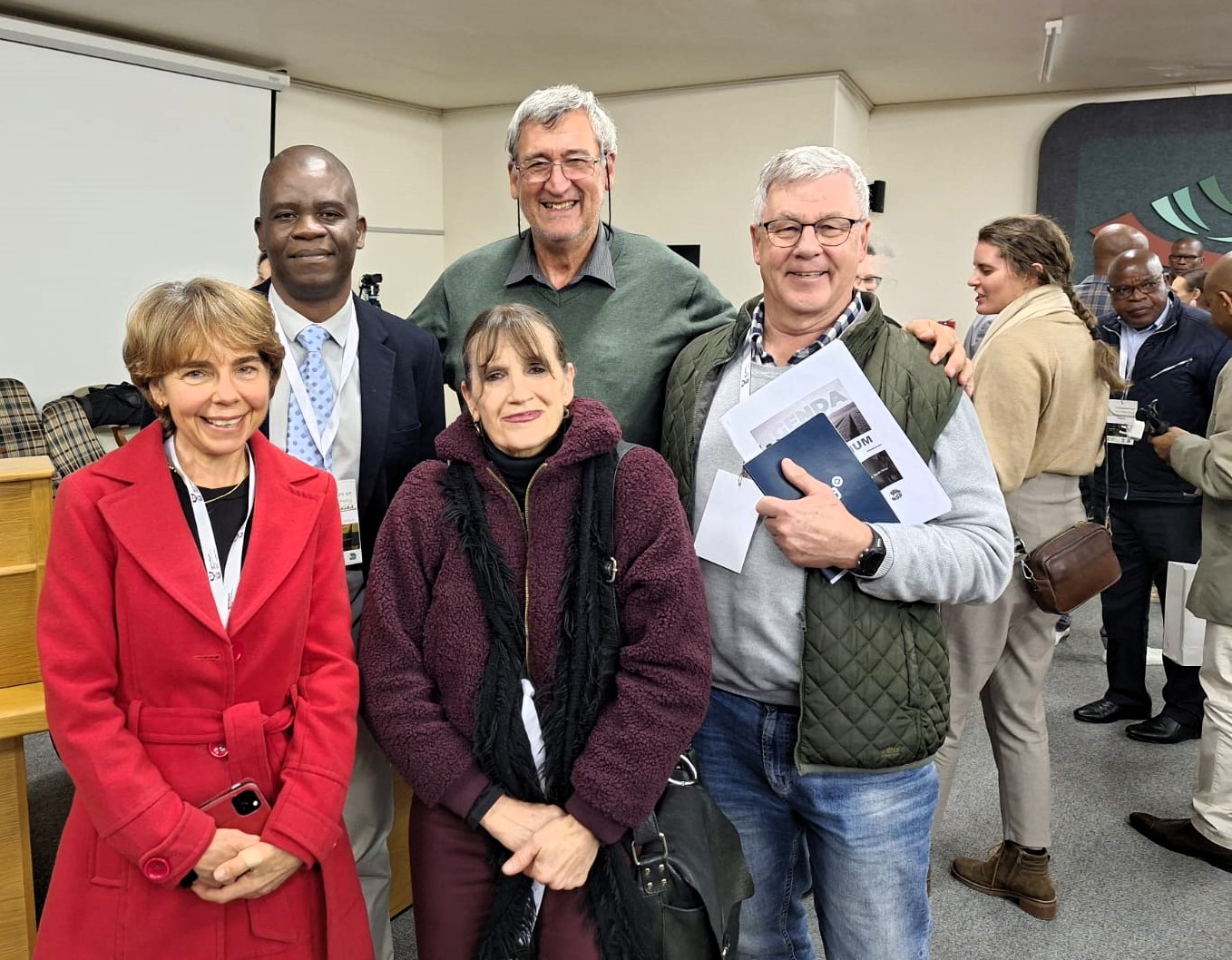
Caption: At the back, from left, Mr Maluta Mudzunga, DoA Registrar, Kobus Hartman, and Hugh Campbell. In front, Sarah le Grange and Lindi Benic.
Find an essential document from CropLife SA, regarding highly hazardous pesticide use here: Highly hazardous pesticides_August 2025
Related Posts
Dennegeur’s Stephan Beukes | Western Cape Farmer of the Year
WESTERN CAPE — Stephan Beukes of Dennegeur Farms in Grabouw has been named the 2026…

Jaco Wolmarans wins Hortgro Photo Competition 2026
Somerset West – Hortgro is proud to announce Jaco Wolmarans as the winner of the…
The 2026 Hortgro Awards Celebrate Excellence in the South African Deciduous Fruit Industry
Somerset West — The annual Hortgro Awards brought together leading figures from the pome and…
Hortgro Izithelo Media Award 2026 | Lucentlands Media
Hortgro awards the Izithelo Media Award annually for outstanding journalism in and about the deciduous…