
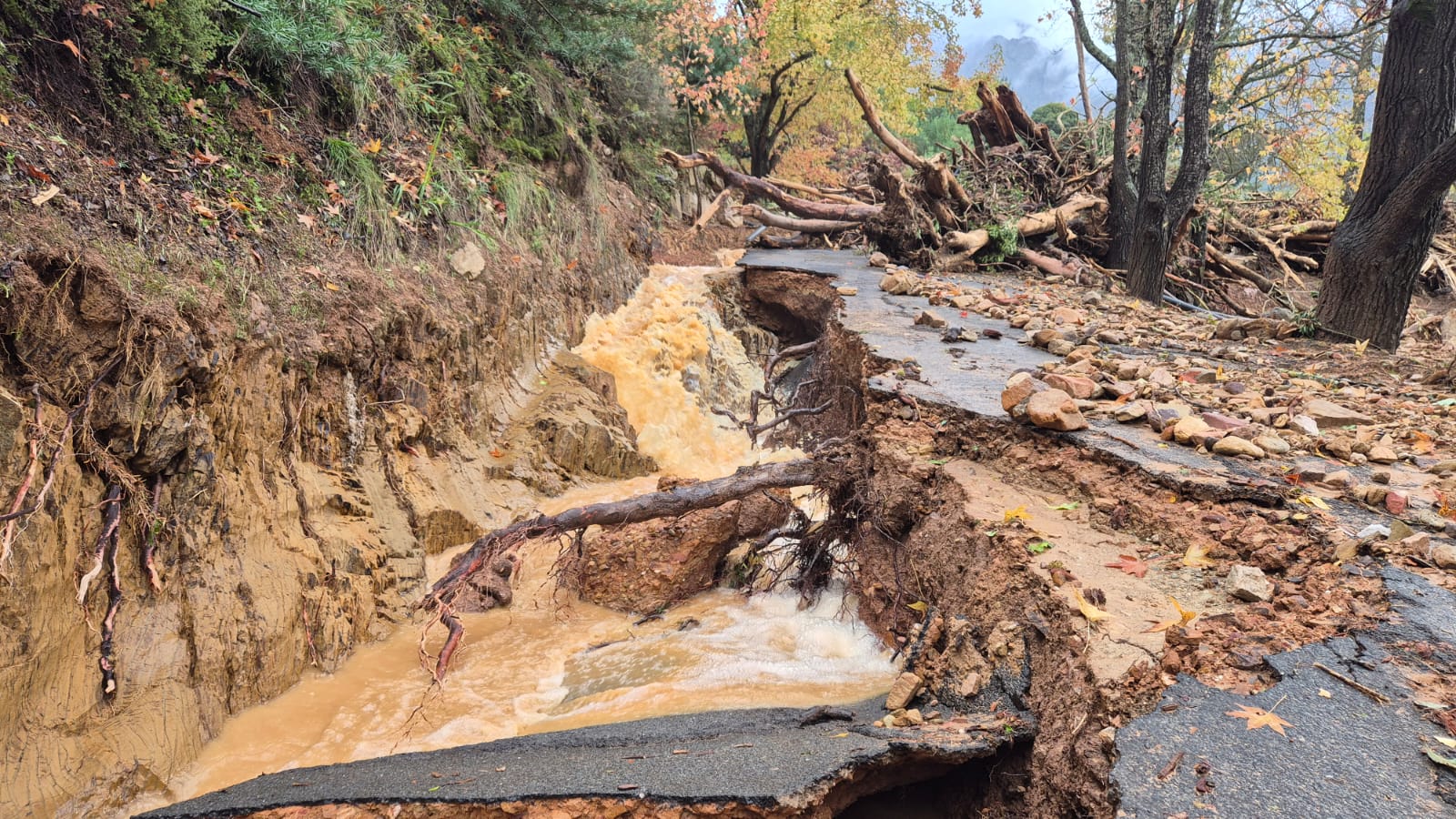
Western and Eastern Cape Floods―Potential of R6.3 billion Agricultural Losses for Pome and Stone Fruit Industry
FOR IMMEDIATE RELEASE: Download it here: PressRelease_Hortgro_StormDamageLosses_22May2026_FINAL
22 May 2026
Western and Eastern Cape Floods―Potential of R6.3 billion Agricultural Losses for Pome and Stone Fruit Industry
Storm damage affected nearly 26% of the national pome and stone industry’s value, destroying critical water supply and infrastructure, and threatening thousands of jobs
PAARL, 22 May 2026 — Severe flooding and storm winds that struck the Western and Eastern Cape in May 2026 have caused an estimated potential R6.3 billion in damage and production losses to the pome and stone fruit industry, according to preliminary assessments compiled in the immediate aftermath of the storm.
The disaster affected orchards, fruit on trees, farmland, housing, dams, packing and cold storage facilities, and transport, electricity, and water infrastructure across the two major producing provinces, with potential total losses of approximately 26% of the combined deciduous industry’s gross production value of R24.6 billion.
Scale and Nature of the Damage
The flooding and wind have caused widespread destruction across several categories of agricultural and rural infrastructure. The damage assessment identifies the following key areas that informed the calculations: agricultural land, dams and water infrastructure, orchards, fruit losses, diesel-powered cold storage, and general infrastructure.
Additional transport costs resulting from road damage requiring detours are substantial across all production areas: Witzenberg, Breede River Valley, Langkloof, and the EGVV (Elgin, Grabouw, Vyeboom, Villiersdorp).
Current reports indicate that more than 75 hectares of productive agricultural farmland (soil) were completely washed away or so severely degraded that replanting will not be possible. Around 30% of the stored water capacity in affected areas was compromised by silting and infrastructure damage. Approximately 150 hectares of orchards were destroyed or severely damaged, including orchard infrastructure such as tree support structures, netting and irrigation systems. Damage to orchards and riparian areas will require extensive rehabilitation. General on-farm infrastructure, including roads, bridges, farm structures, irrigation systems, and packhouses, is estimated to have sustained approximately R100 million in damage. The restoration of electricity to certain areas could take weeks, putting the industry further at risk.
Employment Impact
The disaster has serious consequences for rural employment. The assessment estimates that more than 6,700 direct agricultural jobs are at risk due to the destruction in the Eastern and Western Cape. Orchard, farmland and fruit losses account for most of these, given the labour-intensive nature of fruit production in the EGVV, Ceres, Breede River and Langkloof regions. Given the multiplier effect of agricultural employment on local economies — where each farm job typically sustains several indirect jobs in transport, packaging, retail and services — the total employment impact is likely to be considerably higher.
Damage to Critical Water Infrastructure
Among the most consequential effects of the flooding is the loss and damage to irrigation schemes and systems, infrastructure and the silting of dams across the affected regions. This is particularly alarming given that the Western and Eastern Cape rely heavily on stored water for both agricultural irrigation and domestic water use.
The estimated cost of damage and restoration of the dam capacity exceeds R350 million, with further production losses possible in the following growing season, when orchards are entirely reliant on irrigation, if the issue is not urgently addressed.
Affected Regions
The EGVV, Ceres, Tulbagh, Breede River Valleys and the Langkloof corridor — critical fruit-producing areas of national importance — are among the hardest-hit. Ceres, which supplies a significant share of South Africa’s deciduous fruit exports, has incurred R116.2 million in additional transport costs alone, as damaged roads force produce to travel longer distances or take alternative routes to packhouses and ports. The Langkloof, known for its apple and pear production, faces an additional R28 million in logistical costs. The value of the product currently in storage and at risk is R4.8 billion in apples and pears. In Ceres, alone, packhouses are using thousands of litres of diesel to power generators due to loadshedding.
Industry Significance
The pome and stone fruit sector of the Western and Eastern Cape is valued at R24.6 billion and is a pillar of the regional economy, with strong links to South Africa’s export earnings, food security, and rural livelihoods. A potential loss of nearly one-quarter of this value in a single weather event underscores the vulnerability of agricultural infrastructure to extreme weather and the urgency of investing in flood- and storm-resilient systems.
The damage assessment identifies electricity supply, dam and road rehabilitation, and irrigation infrastructure as areas requiring priority attention, both for immediate repair and for long-term resilience planning.
The industry calls on SANRAL to prioritise repairs to critical road infrastructure in affected areas, while urging Eskom to expedite the restoration of damaged electricity networks. Producers in the Langkloof have further requested temporary logistics solutions to maintain supply chains.
ENDS
- Issued by Hortgro Communications
- Media Enquiries: info@hortgro.co.za or 021 870 2900
- Notes: Information supplied is based on preliminary data received by the pome and stone fruit industry stakeholders, and as new information becomes available, figures might change.
- Picture credit: Charl Herbst
Related Posts

Dennegeur’s Stephan Beukes | Western Cape Farmer of the Year
WESTERN CAPE — Stephan Beukes of Dennegeur Farms in Grabouw has been named the 2026…
Jaco Wolmarans wins Hortgro Photo Competition 2026
Somerset West – Hortgro is proud to announce Jaco Wolmarans as the winner of the…

The 2026 Hortgro Awards Celebrate Excellence in the South African Deciduous Fruit Industry
Somerset West — The annual Hortgro Awards brought together leading figures from the pome and…

Hortgro Izithelo Media Award 2026 | Lucentlands Media
Hortgro awards the Izithelo Media Award annually for outstanding journalism in and about the deciduous…