
Hortfin enters new “green” partnership with the UK Government, unlocking economic development
Text and Pictures: Elise-Marie Steenkamp
A pioneering blended finance partnership between the UK Government, South African development financiers, industry bodies and implementing agencies is demonstrating how collaboration can unlock commercial opportunities for farmers in Mpumalanga, helping to build alternative economic pathways as the region undergoes its energy transition.
In coal-dependent provinces like Mpumalanga, where the shift to a low-carbon economy is reshaping the local economic landscape, new sources of growth are essential. Blended finance supports this shift by using public funds to reduce investment risk and crowd in private capital. This enables farmers to scale their operations, create jobs and build sustainable, climate-resilient businesses.
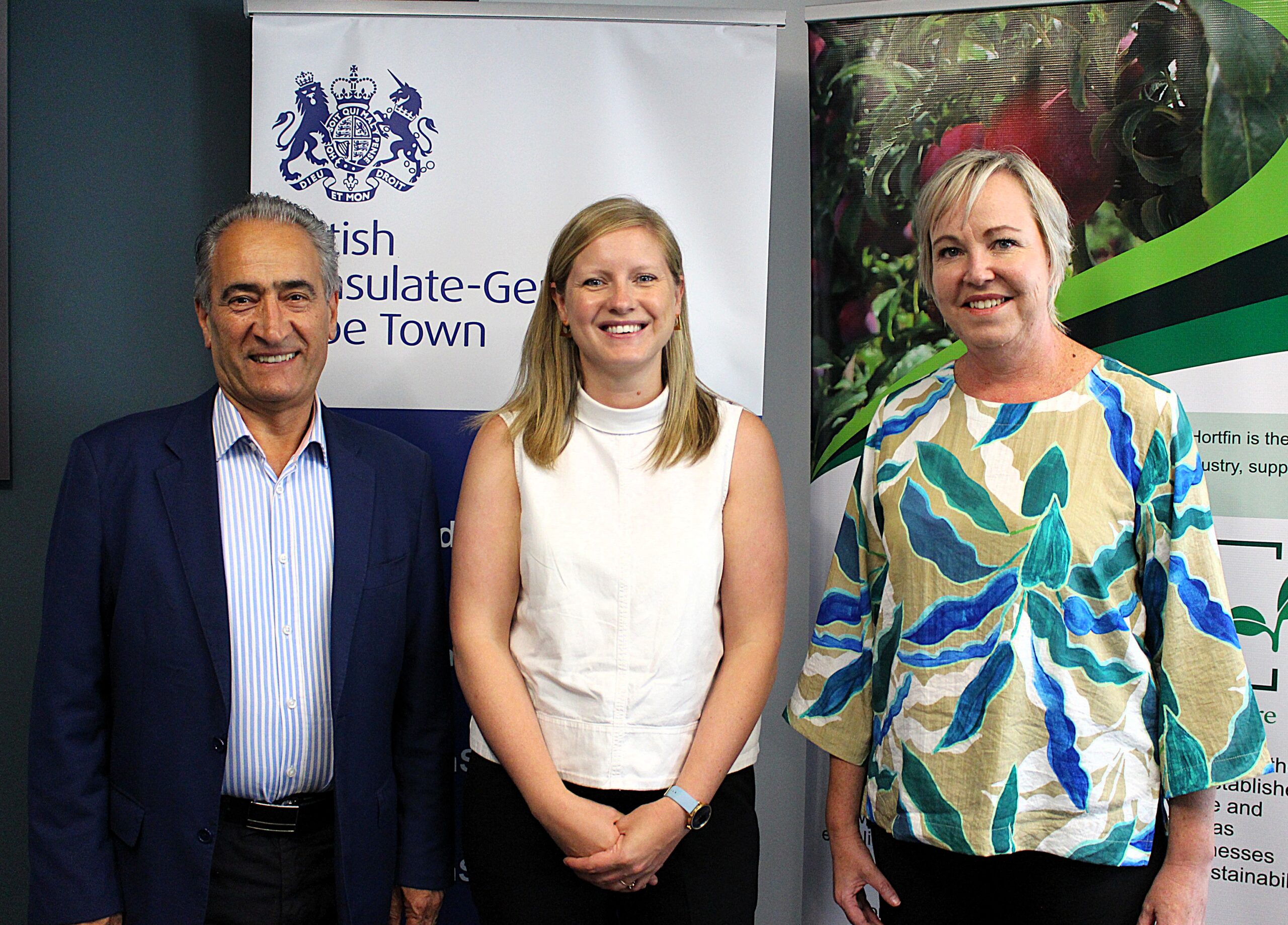
“The UK is committed to supporting South Africa in transitioning to a low-carbon economy. Through this blended finance model, we are working with local partners to pilot innovative solutions that unlock further investment, support the diversification of Mpumalanga’s economy and create jobs,” said Lisa Weedon, Deputy British High Commissioner to South Africa at the launch on 11 February 2026.
Through its implementing partner, TechnoServe, the UK has partnered with two agri-financiers – Hortfin and the Agri Finance Facility (AFF) – to support two pilot investments in Mpumalanga. The UK’s contribution helps de-risk commercial investment and unlock new opportunities for pre-commercial agribusinesses.
This new blended finance partnership between Hortfin and the United Kingdom’s Foreign, Commonwealth & Development Office (FCDO) is set to expand access to affordable, sector-specific funding for emerging farmers, with a strong focus on transformation, job creation and regional growth.
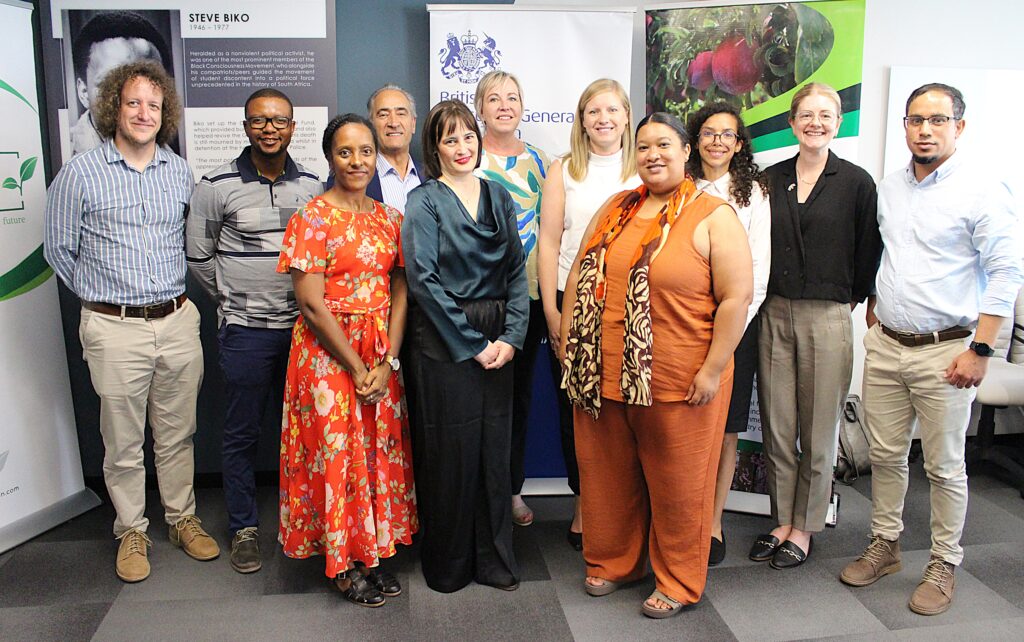
Speaking at the launch, Hortfin CEO Mariette Kotze described the collaboration as a significant step forward in deploying development finance “in a practical and scalable way” to support first-generation black farmers in capital-intensive sectors such as deciduous fruit, table grapes and wine grapes.
Established in 2018 as an R500 million, industry-led public-private partnership, Hortfin was created to address what Kotze termed the agricultural sector’s “missing middle” — the gap between traditional commercial finance and the realities faced by emerging farming enterprises. Over eight years, the fund has grown its loan book to R474 million, leveraging an additional R200 million from other lenders and creating 2 795 new jobs, predominantly in the Western Cape.
However, Kotze stressed that meaningful expansion requires strategic partnerships. Through the FCDO’s DevCap grant, implemented by TechnoServe in collaboration with Hortgro, Hortfin is now piloting its blended-finance model in Mpumalanga — a province identified for future growth in pome, stone and citrus production.
The first project under the partnership will support Afrikan Farms in expanding its apple production from four hectares to 19 hectares, laying the foundations for a commercially viable enterprise expected to create an estimated 85 new jobs. Importantly, the model goes beyond finance, providing technical, marketing and insurance support to address production and climate-related risks.
Kotze highlighted that the introduction of concessionary loans at prime minus 4% marks a first for Hortfin, enabled by blending development and commercial capital. “This partnership allows us to bridge the space between risk and opportunity,” she said, noting that development capital provides the confidence needed to enter new regions and support pre-commercial ventures.
She added that collaboration with the FCDO and TechnoServe has strengthened Hortfin’s approach by embedding environmental and social impact considerations alongside financial sustainability.
Highlighting the broader vision, TechnoServe’s Melanie Machingawuta said: “After seven years of working with the UK Government to tackle global poverty, our focus in South Africa now connects directly to the just energy transition and agricultural transformation. Afrikan Farms shows how partnership and blended finance can turn a pre-commercial farm into an export-ready commercial model that attracts further investment.
Collectively, partners agree that blended finance, anchored in collaboration, technical support and market integration, is more than a funding tool. It is a scalable driver for inclusive growth in Mpumalanga’s transition to a low-carbon economy.
Main picture: Dr Iraj Abedian (AFF CEO), Ms Lisa Weedon (British Deputy High Commissioner), and Mariette Kotze (Hortfin CEO)
Related Posts

Patensie does it again!
Honey Katoo takes top honours at Agri’s Got Talent 2026 For immediate release: 17 October…
Dennegeur’s Stephan Beukes | Western Cape Farmer of the Year
WESTERN CAPE — Stephan Beukes of Dennegeur Farms in Grabouw has been named the 2026…

Ek was daar | The roadmap of Anton Rabe
For more than three decades, Anton Rabe has been part of the story of South…
Jaco Wolmarans wins Hortgro Photo Competition 2026
Somerset West – Hortgro is proud to announce Jaco Wolmarans as the winner of the…